
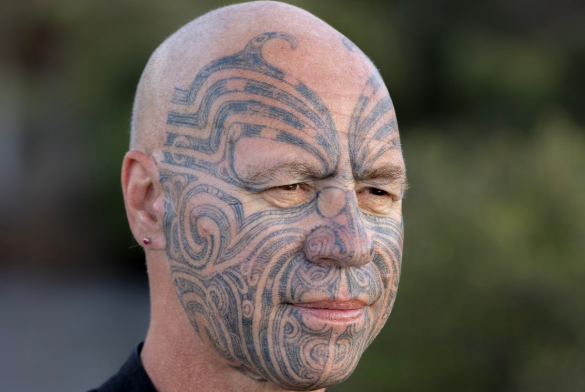
3. Tā moko Face Tattoos – New Zealand (Maori)
Among the Maori people of New Zealand, the Tā moko is one of the most meaningful and visually striking beauty practices in the world. Far more than simple decoration, these facial tattoos represent identity, lineage, honor, and personal history. Traditionally worn by Maori men—and in some regions by women as well—the Tā moko marked important life transitions, including the passage from boyhood to adulthood. Every curve, spiral, and line in the tattoo carries a specific cultural meaning. Instead of viewing the tattoo as a single design, the Maori understand it as a map of the individual’s ancestry and achievements.
A more detailed and complex pattern suggests greater prestige and higher social status. Wearing the Tā moko also enhanced attractiveness within the community, as it signaled strength, courage, and eligibility for leadership. The tattooing process was painful, especially in older times when chiseling tools were used to carve the skin.
Enduring the procedure showed the individual’s ability to withstand hardship, further proving their readiness to enter adult life. Although Western influence once caused the practice to decline, the Tā moko has seen a powerful revival in recent decades. Many Maori now wear it as a proud statement of cultural survival. It remains a beautiful reminder that identity can be displayed permanently and proudly on the skin.
