
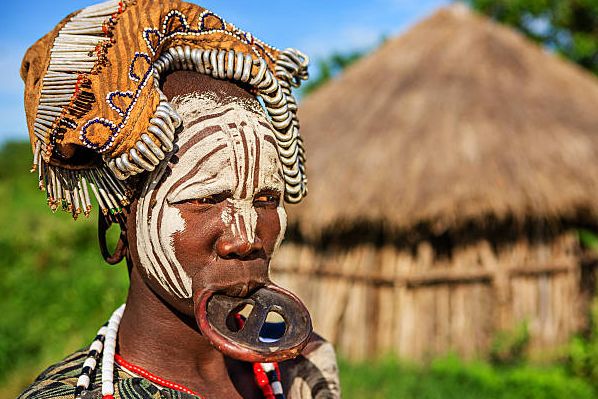
8. Lip Plates – Ethiopia (Mursi Tribe)
In Ethiopia’s Mursi tribe, the lip plate—or labret—is one of the most iconic and visually striking beauty practices in the world. Beginning before puberty, young girls have their lower lip pierced so a small wooden plug can be inserted. Over time, the plug is replaced by larger clay discs, stretching the lip to dramatic proportions. Despite its intense appearance, the lip plate represents beauty, social status, adulthood, and cultural pride among the Mursi.
A larger plate often indicates a higher standing within the community and may also symbolize the woman’s strength and readiness for marriage. Anthropologists have proposed several theories about the origin of the practice. Some believe the lip plate was used to deter slave traders centuries ago, while others argue it marks identity, fertility, or protection against evil spirits.
Women typically wear the plate during important events, ceremonies, and interactions with men, but remove it during everyday tasks. While the tradition is controversial to outside observers, it remains a significant symbol of cultural meaning within the tribe. The lip plate highlights how beauty can reflect heritage, resilience, and deep-rooted ritual rather than universally shared standards.
